
Which fabric is coolest in hot weather?
Linen is the coolest fabric you can wear in hot weather. Its fibres are hollow and highly absorbent, and it is woven loosely enough to let air move freely against the skin. Cotton comes a close second, provided the weave is open — a loose-weave cotton will outperform a tightly woven one every time. Synthetics such as polyester trap heat and moisture against the body and are best avoided entirely.
That is the answer in one paragraph. The rest of this guide explains why, and how to choose between the options in practice.
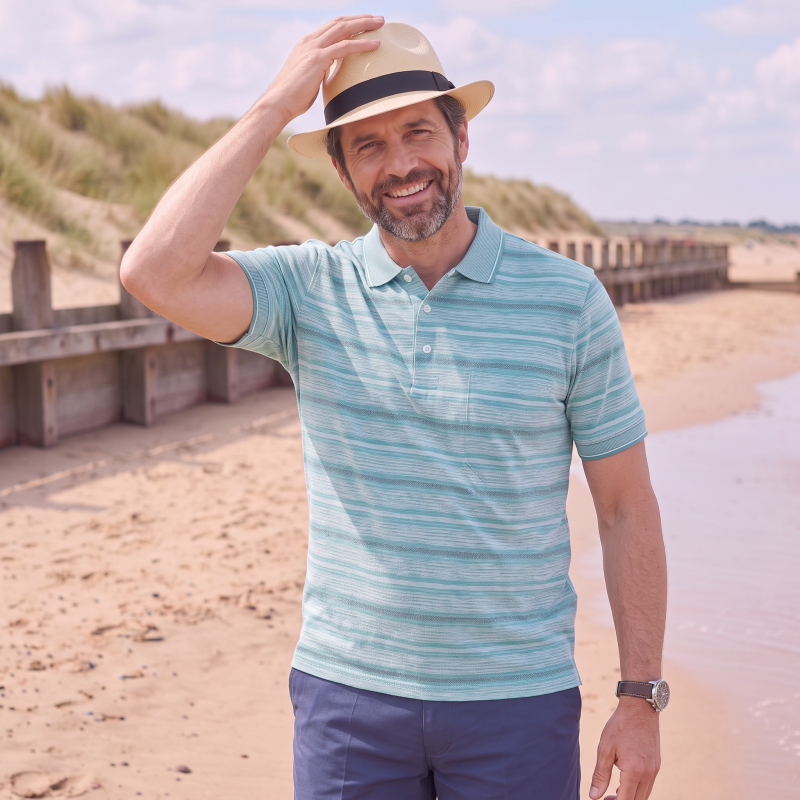
It isn’t only the fibre — it’s the weave
Most advice about summer clothing stops at the fabric name, which is why so much of it is unhelpful. Two shirts can both be one hundred percent cotton and behave completely differently in the heat.
What matters is how much air can pass through the cloth. A tightly woven cotton twill sits close and flat against the skin, holding warm air against you. An open-weave cotton voile or a loose Oxford lets that warm air escape and draws cooler air in. Same fibre, entirely different experience on a July afternoon.
The second thing that matters is how the fabric handles moisture. Breathability and moisture-wicking are not the same. A breathable fabric lets air through. A wicking fabric pulls moisture away from the skin so it can evaporate — and evaporation is what actually cools you down. Natural fibres like linen and cotton do both well. Most synthetics do neither, whatever the marketing on the label says.
So when you are choosing a summer shirt, hold it up to the light. If you can see daylight through the weave, it will breathe.
The fabrics worth wearing
Linen
Nothing beats it. Linen is spun from flax, and the fibres are hollow, which means they carry moisture away from the skin quickly and dry fast. It is also naturally stiff, so it holds itself slightly away from the body rather than clinging — a small detail that makes a large difference when the temperature climbs.
It creases. There is no getting around this, and anyone who tells you otherwise is selling a blend. But the creasing is a consequence of the same fibre structure that makes linen so cool to wear, and a softly rumpled linen shirt has always looked correct in summer. It is not untidiness; it is the fabric doing its job.
Best for: the hottest days, holidays, garden parties, anywhere you would rather be comfortable than crisp.
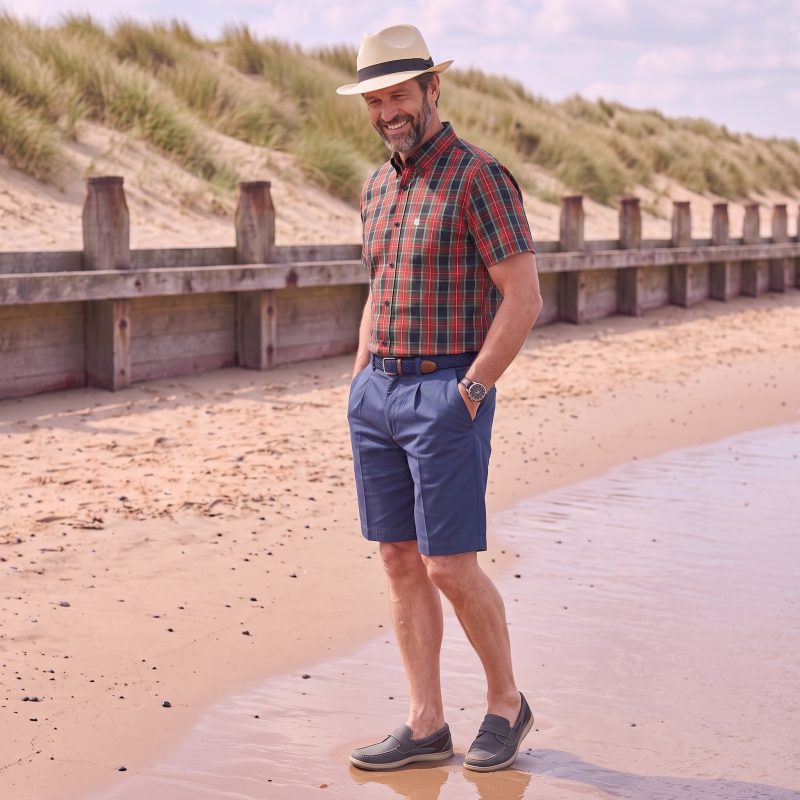
Cotton poplin and Oxford
The dependable choice. Poplin is smooth and lightweight with a fine, even weave — cool without being casual, and it takes a press well. Oxford cotton has a slightly heavier basketweave that gives it texture and durability, and it softens beautifully with washing.
Cotton is the right answer for anyone who wants to stay cool without thinking about it. It holds its shape, it launders easily, and it works as comfortably at a summer wedding as it does in the garden.
Best for: everyday wear, occasions where you want to look put together, and anyone who dislikes ironing.
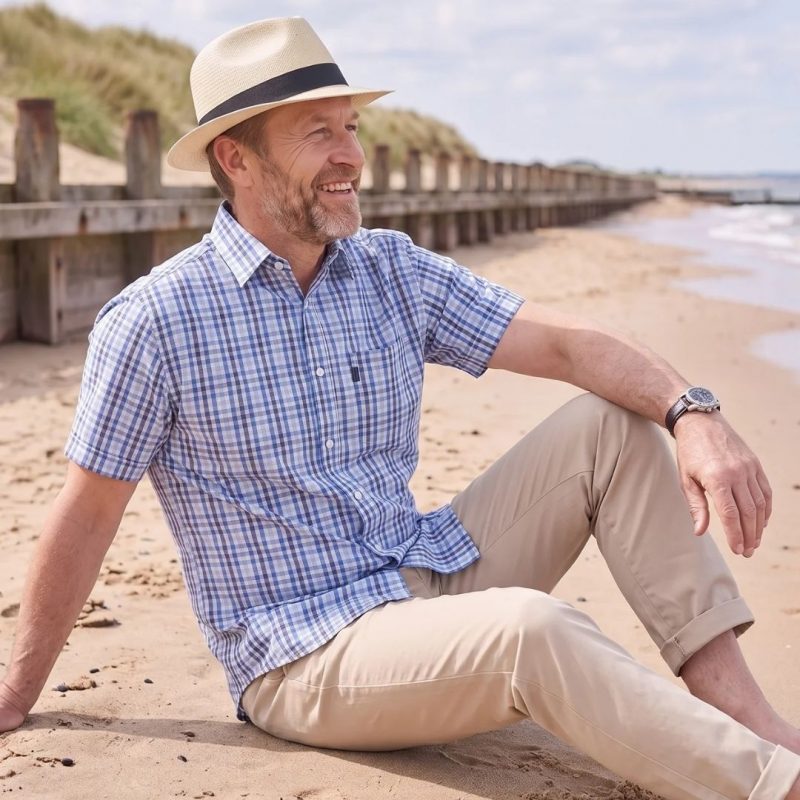
Seersucker
The cleverest fabric in summer menswear, and the most overlooked. Seersucker is woven so that some threads pucker while others lie flat, creating a permanently crinkled surface. Those puckers hold most of the cloth a fraction of an inch off the skin, so air circulates underneath it constantly.
It also never needs ironing. The crinkle is woven in, not pressed in, so it comes out of the wash looking exactly as it should. For travelling, it is close to unbeatable.
Best for: hot weather when you still need to look smart, and packing.
Chambray
Chambray looks like denim and weighs almost nothing. It is a plain-weave cotton with a coloured warp and a white weft, which gives it that soft, faded blue depth without any of denim’s weight or stiffness.
It is the answer for a man who wants something casual but has no interest in wearing a t-shirt. Rolled to the elbow with lightweight trousers, it works for almost everything short of a formal occasion.
Best for: relaxed summer days, travel, and anyone who wants casual without looking underdressed.
Cotton-linen blends
The practical compromise, and for many men the sensible default. A blend keeps most of linen’s coolness while borrowing cotton’s resistance to creasing and its easier handling in the wash. You lose a little breathability and gain a good deal of convenience.
If linen appeals but the creasing puts you off, this is where to start.
Best for: men who want linen’s comfort with less maintenance.
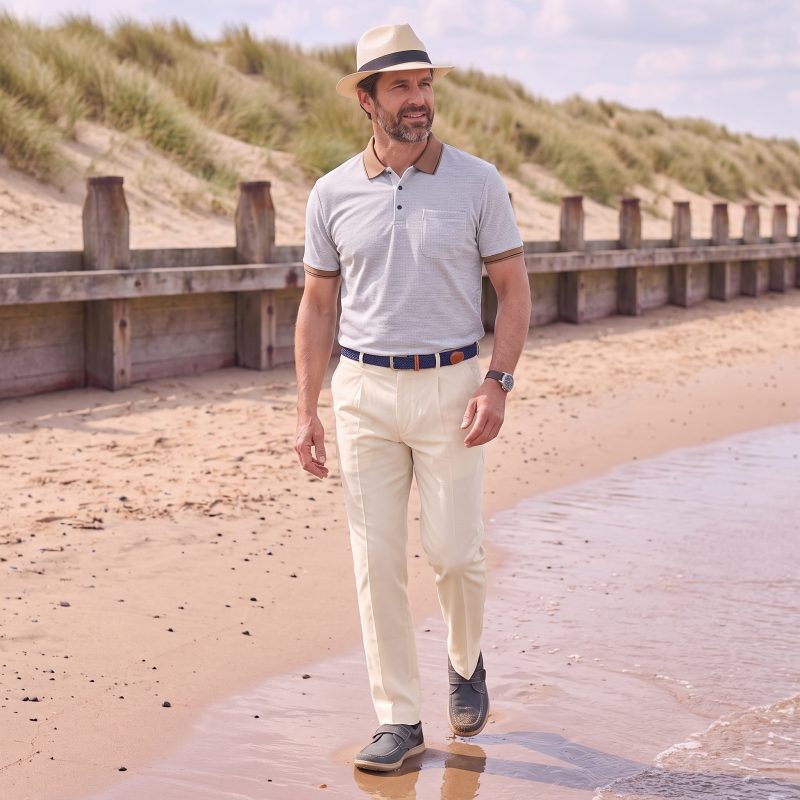
The fabrics to avoid
Polyester. It does not absorb moisture, so sweat has nowhere to go. It sits against the skin, holds heat, and retains odour. Avoid it in shirts entirely, and check the composition label rather than trusting how a fabric feels in the shop.
Heavy denim and thick twills. Excellent trousers for nine months of the year, and thoroughly unpleasant in a heatwave. Swap to a lightweight cotton chino or a linen-blend trouser.
Linings and interfacings. This is the one that catches people out. A shirt can be perfectly good cotton and still be uncomfortable because the collar and cuffs are backed with fused synthetic interfacing. Unstructured or soft-collared summer shirts are noticeably cooler for exactly this reason.
Anything described as “wrinkle-free” without further explanation. Usually a synthetic finish or a high polyester content. Read the label.
The sweat question nobody addresses
Most guides to summer clothing stop at comfort, which skips the thing men actually worry about: visible sweat marks.
Fabric choice makes a real difference here. Linen and open-weave cottons dry quickly, so marks fade rather than spreading. Synthetics do the opposite — moisture sits on the surface and stays visible for hours.
Colour matters just as much. Mid-tone blues, greys and khakis are the worst offenders, because they darken dramatically when damp. White and very pale shades hide marks well, and so do deep, saturated colours like navy and burgundy. Anything patterned — a check, a stripe, a subtle texture — breaks up the surface and disguises a great deal.
If it is a concern, a textured weave in a dark shade or a pale colour in linen will serve you far better than a plain mid-blue cotton.
Staying cool without wearing less
There is an assumption running through most hot-weather advice that the solution is shorts and short sleeves. Plenty of men have no interest in either, and they should not have to compromise on comfort for it.
The good news is that coverage and coolness are not opposites. A loose-fitting long-sleeved linen shirt is genuinely cooler in direct sun than a t-shirt, because the fabric shades the skin while still letting air move. This is why people in the hottest parts of the world have dressed in loose, covering, light-coloured cloth for centuries.
The principles are straightforward. Choose a relaxed cut over a slim one, so air can circulate. Pick natural fibres in pale or light colours. Roll the sleeves when you want to and turn them down when the sun is strong. Pair with a lightweight cotton or linen-blend trouser rather than shorts.
There is a sun protection argument too. A closely woven light-coloured fabric blocks a surprising amount of UV, and a covered forearm needs no sun cream. On a long afternoon outdoors, a linen shirt is the more sensible choice by some margin.

Putting it together
If you take one thing from this: choose natural fibres, look for an open weave, and go a size looser than you would in winter.
For the hottest days, linen. For everyday reliability, cotton. For travel and smart occasions, seersucker. For casual weekends, chambray. And check the label for polyester before anything else — it is the single change that will make the biggest difference to how you feel in August.
Frequently asked questions
Which fabric is coolest in hot weather?
Linen. Its hollow fibres carry moisture away from the skin and dry rapidly, and it is woven loosely enough for air to circulate freely. Loose-weave cotton is a close second.
Is linen or cotton cooler?
Linen is cooler. It absorbs more moisture, dries faster, and holds itself away from the skin rather than clinging. Cotton is more resistant to creasing and easier to launder, which is why many men prefer a cotton-linen blend.
Why does linen crease so much?
The flax fibres that make linen so breathable are also relatively inflexible, so they hold a fold. It is a direct consequence of what makes the fabric cool to wear, and a light crease is considered part of how linen should look.
What fabric hides sweat marks best?
Fast-drying natural fibres in either very pale or very dark colours. Textured and patterned fabrics disguise marks well. Mid-tone plain colours and synthetics are the worst choices.
Is polyester bad in hot weather?
Yes. It does not absorb moisture, so perspiration remains against the skin instead of evaporating. It also traps heat and holds odour. Check the composition label before buying.
Should I wear long sleeves in hot weather?
A loose long-sleeved shirt in linen or lightweight cotton is often cooler in direct sunlight than short sleeves, because the fabric shades the skin while air still circulates beneath it. It also removes the need for sun cream on the arms.



Leave a Reply
You must be logged in to post a comment.