
Stopping distances can be up to 10 times longer on icy roads than on dry ones. Cold weather also reduces battery output by as much as 50%, which is exactly why a flat battery is the single most common cause of winter breakdowns (RAC/AA). None of that is really about age. It’s about weather most drivers only deal with a few weeks a year, and it catches people out however long they’ve been driving.
What’s changed is what’s at stake. Department for Transport figures show 3,382 people aged 70 and over were killed or seriously injured on Britain’s roads in 2025, and serious injuries in this age group haven’t fallen at the same rate as for younger drivers. That’s not a reason to stop driving. It’s a reason to be properly prepared before the first cold snap, not after it.
Here’s what to check, and what to keep in the car from November onwards.
Key Takeaways
- Stopping distances can be 10 times longer on ice than on a dry road
- Cold weather cuts battery output by up to 50%, making flat batteries the top cause of winter breakdowns (RAC/AA)
- 3,382 people aged 70+ were killed or seriously injured on GB roads in 2025 (Department for Transport)
- A five-minute check before you set off (screen, mirrors, lights, fuel) prevents most winter incidents before they start
Jolliman men’s winter outerwear
Why Does Winter Catch Older Drivers Out Specifically?
It isn’t reaction times or ability. It’s exposure and consequence. Older drivers are more likely to make shorter, local journeys in poor light and cold, where an unheated car, a frosted screen scraped in a hurry, or a road that’s iced over in shadow all matter more than they would on a familiar motorway run. And when something does go wrong, cold weather turns a minor delay into a genuinely uncomfortable, sometimes risky wait for help.
The fix isn’t driving less. It’s a car that’s properly prepared and a routine that takes the guesswork out of a frosty morning.
What Should Be in the Car From November?
A proper ice scraper and a can of de-icer rated for genuinely cold mornings, kept in the car rather than the garage, so you’re never tempted to use a credit card or hot water on the screen. A torch, ideally one that doesn’t rely on your phone. A blanket and a warm layer, in case you’re ever stuck waiting for recovery in the cold. A phone charger that works from the car’s own power. High-visibility clothing or a vest, for the rare occasion you need to get out on a roadside in poor light. And screenwash rated to at least minus 15°C, since standard summer screenwash freezes solid on the coldest mornings and does nothing but smear ice across the glass.
Worth knowing: A warm gilet or jacket kept in the car, not just at home, means you’re never caught out in shirtsleeves if you break down somewhere exposed. It sounds obvious until the one morning you actually need it.
How Do You Stop the Battery Dying on a Cold Morning?
Cold reduces a battery’s output by up to 50%, and a battery that was already tired in September often won’t survive its first proper frost in November (RAC/AA). If your battery is more than four or five years old, get it tested before winter properly sets in, not after it’s already left you stranded on the drive. Turn off anything you don’t need, heated seats, the radio, extra lights, while the engine’s cold and working hardest to start. And if a car sits unused for more than a few days at a time, a short run now and then keeps the battery topped up far better than leaving it idle.
What Changes About Stopping Distances in Winter?
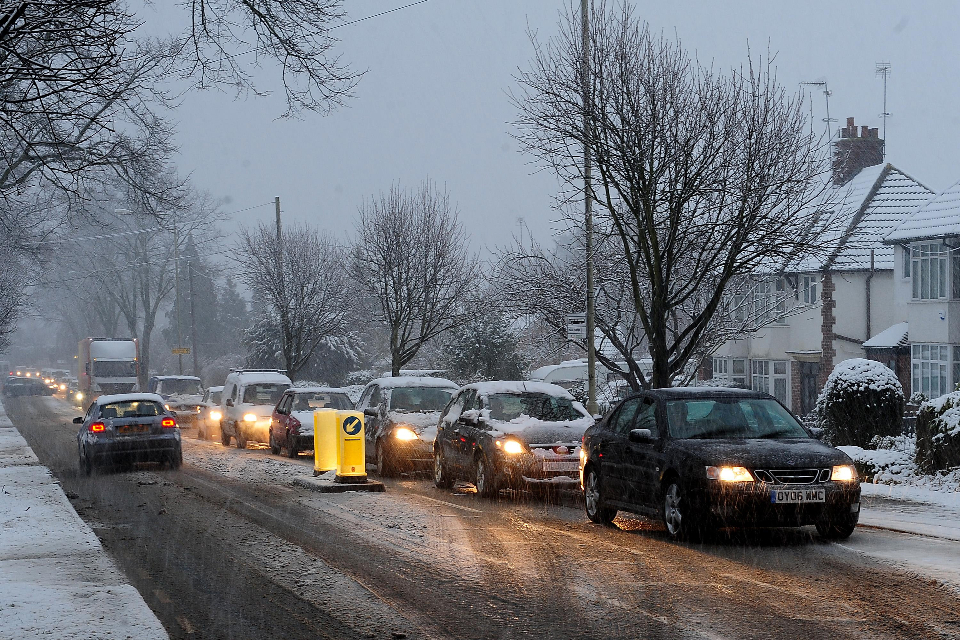
On ice, stopping distances can stretch to 10 times what they’d be on a dry road, and even on merely wet or greasy roads they roughly double. That means the gap you’d normally leave to the car in front simply isn’t enough once the temperature drops. Leaving extra space, braking earlier and more gently, and slowing well before a bend rather than during it all matter more in December than they do in June, and they cost nothing except a little extra time on the journey.
Real-world note: Black ice is most dangerous precisely because it doesn’t look like anything. A road that looks merely wet, especially in shade, on a bridge, or first thing in the morning, is the one most likely to catch a driver out. Treat any road under 3°C as potentially icy, whether it looks it or not.
Is It Ever Better Not to Drive?
Yes, sometimes, and there’s no shame in it. If the Met Office has issued an amber or red warning, if untreated roads are visibly iced, or if you simply don’t feel confident, waiting an hour or rearranging a journey is the sensible choice, not a failure of nerve. Most winter driving incidents happen to people who felt they had no choice but to go. Very often, there was a choice.
Five Checks Before Any Winter Journey
- Clear the whole screen, not a porthole. A small cleared patch feels quicker but leaves dangerous blind spots exactly where they matter most.
- Check tyre tread and pressure. Tread below 3mm makes a real difference to grip in wet or icy conditions, even if it’s still above the legal minimum.
- Top up screenwash rated for real cold. Standard summer mix freezes and does nothing but smear the screen on a proper frosty morning.
- Charge your phone before you leave. It’s the single easiest way to get help quickly if something does go wrong.
- Tell someone your route and rough timing. On a longer or less familiar winter journey, it costs nothing and matters if plans change.
Ready to Sort Your Winter Kit?
Jolliman stocks the warm, practical layers worth keeping in the car as well as on your back this winter, gilets, water-resistant jackets and thermal layers that mean you’re never caught out in the cold if a journey doesn’t go to plan. Browse the full range and get ready before the first proper frost.
Jolliman men’s clothing · Jolliman winter essentials
Frequently Asked Questions
What should I always keep in the car in winter?
An ice scraper and de-icer, a torch, a blanket or warm layer, a phone charger, high-visibility clothing and screenwash rated to at least minus 15°C. These cover the most common winter problems: a frosted screen, a breakdown in the cold, and poor visibility on the roadside.
Why do car batteries fail more often in winter?
Cold weather reduces a battery’s output by up to 50%, and a battery that’s already ageing often can’t cope with the extra demand of a cold start (RAC/AA). It’s the single most common cause of winter breakdowns, which is why testing an older battery before winter is worth the ten minutes it takes.
How much longer are stopping distances in icy conditions?
Stopping distances can be up to 10 times longer on ice than on a dry road, and roughly double on a wet one. That means leaving significantly more space to the car in front, and braking earlier and more gently than you would in dry conditions.
Is it safe for older drivers to drive in winter?
Yes, with sensible precautions. The risk isn’t age itself, it’s exposure to poor conditions in an unprepared car. A properly checked vehicle, a winter kit in the boot, and a willingness to delay a journey in genuinely bad weather all reduce risk significantly, whatever your age.
What’s the biggest mistake drivers make on frosty mornings?
Clearing only a small patch of the windscreen rather than the whole thing. It feels quicker but leaves dangerous blind spots exactly where they matter, and it’s one of the easiest winter driving mistakes to fix with an extra two minutes and a proper scraper.
In Summary
Winter driving risk comes down to preparation more than anything else. A car with a tested battery, decent tyres and the right screenwash, a kit in the boot that covers the basics, and a willingness to leave extra space, or leave the car at home, on the worst days.
None of it takes long, and most of it costs very little. Sorted once in November, it covers you for the whole winter rather than leaving you scrambling on the first properly cold morning.
Stopping distances can be 10 times longer on ice. A few minutes of preparation is a small price for that kind of margin.





Leave a Reply
You must be logged in to post a comment.