
When Italian engineer Ferdinando Innocenti launched the Lambretta scooter at the 1947 Milan Trade Fair, he wasn’t thinking about fashion. He was solving a problem — fuel scarcity and the need for affordable transport in post-war Italy. But within fifteen years, his machine had become the defining icon of British mod culture, and the clothing brand that carries his name still reflects that same sharp, no-nonsense character today.
This guide covers the full Lambretta clothing range — from its two signature pieces (the tipped polo and the Harrington jacket) to its tartan shirts, stripe polos, and slim chinos — and explains why it remains one of the most consistent heritage menswear brands available in the UK.
Key Takeaways – Lambretta clothing launched in 1997, drawing on the scooter brand’s 1947 Italian heritage and British mod culture – The tipped polo shirt and Harrington jacket are the two signature pieces — both carry mod DNA in their construction – Over 2 million Lambretta scooters were on the road by 1965, cementing the brand’s cultural authority – Core customer: men aged 35–65 who value distinctive, well-made clothes without fashion noise
What Is Lambretta Clothing — And Why Does It Have a Scooter Logo?
Lambretta clothing is a British heritage menswear brand founded in 1997, licensing the name of the iconic Italian scooter manufacturer that ran from 1947 to 1971. The scooter sold 9,669 units in its very first production year, a figure that established it immediately as a serious rival to the Vespa. The clothing brand carries that founding year in its tagline: Iconic Since 1947.
The logo isn’t mere nostalgia-branding. The Lambretta scooter was the vehicle that physically carried mod culture from South London to the coast of Brighton, from Northern soul nights to Italian coffee bars. Wearing the badge means something to a specific generation of British men — and the brand knows it.
The aesthetic is built around clean lines, tipped collar detailing, and a distinctly unpretentious sharpness. It’s not loud. It’s not trying to be streetwear. It occupies a specific lane — mod-rooted, adult, British — and it stays there.
The Mod Connection — How a Scooter Brand Became a Fashion Icon
The Lambretta’s cultural authority in Britain runs deeper than most people realise. By 1965, over 2 million Lambretta machines were on roads worldwide, manufactured across licensed plants in France, Spain, Brazil, Argentina, and India. That global reach is notable — but it was the specifically British mod adoption of the scooter that made it iconic.
In the late 1950s, young working-class Londoners began choosing the Lambretta over the Vespa for reasons that were partly practical (spare parts, price) and partly aesthetic (the Lambretta’s cleaner, more mechanical lines). They called themselves Modernists. The scooter was their vehicle. The clothes they wore on it — sharp suits, tipped polos, cropped jackets — became the visual language of a movement.
The parka came directly from riding. Mods wore ex-US Army fishtail parkas over their suits to protect them from road dirt while riding to work or to a club — function bred into a fashion statement. That same logic — clothing that works with your life, not against it — still defines what Lambretta makes today.
The cultural peak came in 1979 with Quadrophenia, The Who’s film adaptation that put a 1967 Lambretta Li150 on screen and into the imagination of a new generation. That same scooter sold at Bonhams auction in 2008 for £36,000 — a figure that tells you everything about how seriously collectors take this heritage.
The mod scene isn’t history. The Isle of Wight Scooterist Meltdown draws 2,500 Lambretta riders annually. Northern Soul nights, scooter rallies, mod-influenced fashion coverage — the community that buys Lambretta clothing is active, not archival.
The Lambretta Polo Shirt — Why It’s the Brand’s Signature Piece
The tipped polo is Lambretta’s most recognisable garment, and with good reason. Contrasting stripe detail on the collar and cuffs — a direct nod to the colour-blocking of 1960s mod tailoring — sets it apart from any generic high-street polo at a glance. It’s a specific statement, not a neutral wardrobe filler.
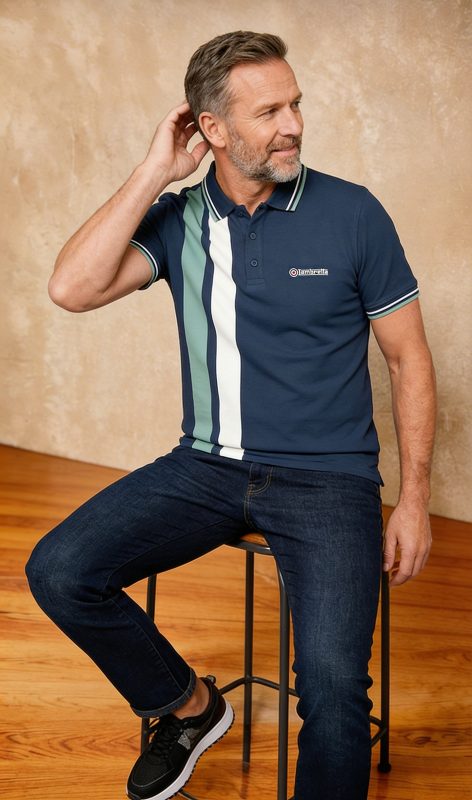
Construction is in pique cotton: structured enough to hold its shape through a day’s wear, breathable enough for warmer months. The fit sits between a true slim and a relaxed cut — not vanity sizing, not oversized. It runs true, with enough room through the chest that it works untucked as easily as tucked.
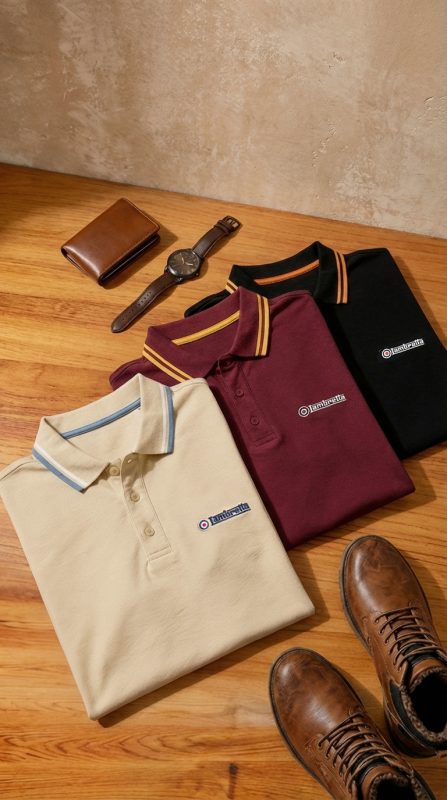
The tipping system runs across multiple colourways. The JB357 takes the colour-block approach furthest, with vertical panels of navy, sage, and cream. The JB355 range — available in cream with blue tipping, burgundy with gold tipping, and black with gold tipping — is the more classic expression: a clean base with contrasting collar and cuff stripes, and the Lambretta brand embroidered neatly on the chest.
The UK menswear market is forecast to grow from its current £26.03 billion valuation to £47.1 billion by 2035 at a 6.2% compound annual growth rate, 2024), with heritage brand demand identified as a key growth driver. The tipped polo sits exactly where that demand is strongest: recognisable, quality-made, and distinctly British without being costume.
The Harrington Jacket — Lambretta’s Other Essential Piece
If the polo is the brand’s most visible garment, the Harrington jacket is its most significant. The two pieces belong together — historically and practically — and no Lambretta wardrobe is complete without one.
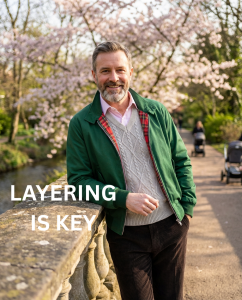
The Harrington has a specific construction: a zip-front stand collar, ribbed cuffs and hem, a hip-length cut that sits just below the waist, and — critically — a tartan lining. That lining is the tell. It’s the detail that separates a genuine Harrington from a generic zip jacket, and Lambretta’s version carries it faithfully. The jacket takes its name from Rodney Harrington, a character in the American television drama Peyton Place, who wore the style throughout the 1960s. But it’s British mods who made it iconic.
Mods chose the Harrington because it solved a specific problem: the parka was warm but bulky; the suit jacket was sharp but fragile on a scooter. The Harrington sat between the two — lighter than a parka, more protective than tailoring, smart enough for an evening out and practical enough for a ride. It worked with everything in the mod wardrobe.
Lambretta’s Harrington carries that same logic into 2026. It layers cleanly over a tipped polo without adding bulk at the shoulders. It works in spring and autumn as a standalone layer, and bridges the gap between smart-casual and weekend wear that few other jackets manage. Available in navy, black, and stone/camel, the colourway range is deliberately restrained — these are pieces built to work with a wardrobe, not to dominate it.
Styling note: The Harrington works best as the final layer in a three-piece mod build. A navy Harrington over a JB355 tipped polo (burgundy/gold), with JD323 stone chinos and tan desert boots, is the complete silhouette — clean, intentional, and not a costume.
Beyond the Two Essentials — The Full Lambretta Range
The polo and Harrington are where most buyers start, but the range extends further — and the same mod-rooted aesthetic runs through every piece.
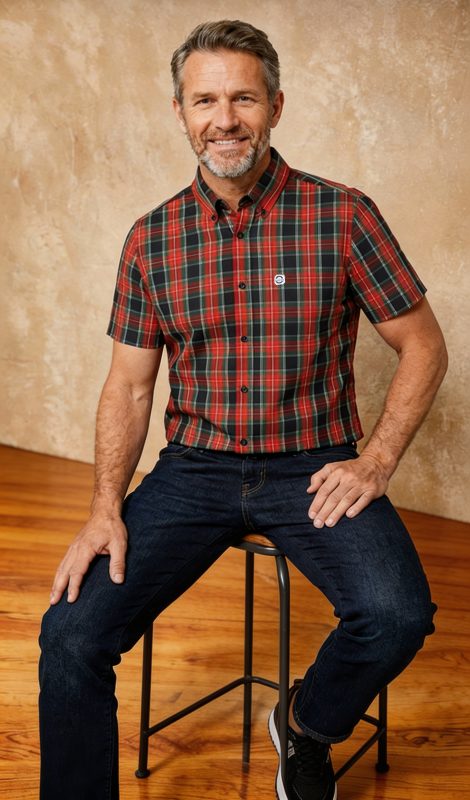
Tartan shirts (JB358) are the summer alternative to the polo. Bold red check, short-sleeve cut, Lambretta badge embroidered on the chest — smart-casual without effort. They work with dark jeans or slim chinos, and the check pattern gives them a distinctly British edge that plain-colour shirts don’t carry.
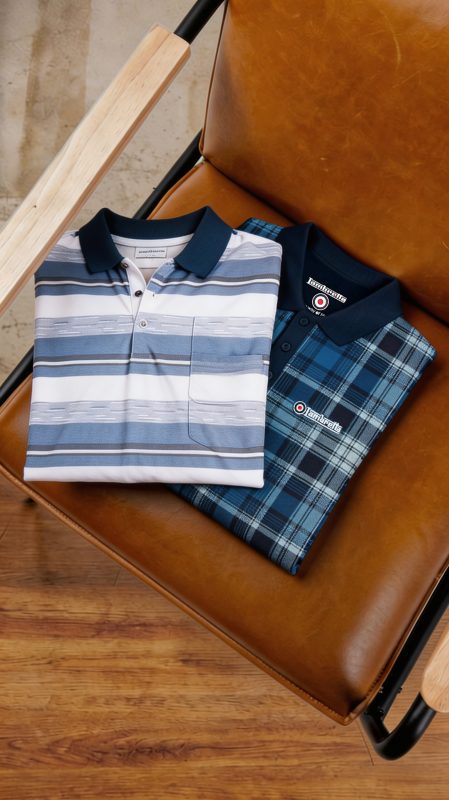
Stripe and tartan polos (JB226, JB359) are the more relaxed end of the polo range. The JB226 is a blue and white horizontal stripe with a chest pocket — more casual, slightly retro-seaside in feel. The JB359 is a navy tartan polo carrying the Lambretta target badge — a nod to the mod roundel that appears across the brand’s branding. Both suit men who want the brand identity without the formality of the tipped collar styles.
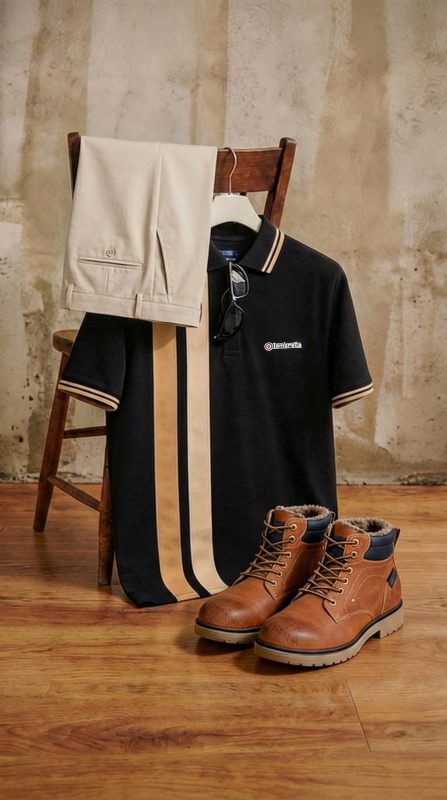
Slim chinos (JD323) complete the picture. Stone/beige with a tipped leg stripe, cut slim without being restrictive — the mod trouser in 2026 terms. They pair with every polo and shirt in the range, and with the Harrington as described above.
The brand also produces knitwear and hoodies for colder months, maintaining the same clean aesthetic with panel detailing and brand embroidery throughout.
How to Style Lambretta Clothing in 2026
The mod look works because it’s intrinsically wearable. It’s smart without being formal, distinctive without requiring the full costume commitment. The pieces are modular — they work individually alongside non-Lambretta items just as well as they do as a complete outfit.
Here are four builds using the Jolliman range:
Weekend casual JB357 colour-block polo (navy/sage/cream) + dark slim jeans + clean white trainers. The colour-block polo carries the outfit — everything else is deliberately neutral.
Smart casual JB355 tipped polo (burgundy/gold) + JD323 stone chinos + tan brogue boots + leather watch. The gold tipping on the polo picks up the warm tones in the leather. This works for a pub lunch, a day out, or a casual evening.
Summer sharp JB358 tartan shirt (red check) + slim navy chinos + brown loafers. The tartan is bold but the slim cut keeps it from reading as busy. Works equally well with the shirt tucked or left out.
The full mod silhouette Navy Harrington jacket + JB355 tipped polo (cream/blue) + JD323 stone chinos + desert boots. The classic three-piece mod build — jacket, polo, slim trouser. The tipping on the polo collar and the tartan lining of the Harrington are the only two pattern elements. Everything else is clean.
Who Actually Wears Lambretta Clothing?
Lambretta’s core UK buyer is men aged 35–65 — men who grew up in or around mod culture, who remember Britpop, or who simply appreciate well-made clothes with a clear design logic and no fashion noise. The brand doesn’t try to be everything. That specificity is a strength.
The UK second-hand and vintage apparel market — a strong indicator of appetite for heritage aesthetics — is forecast to reach £6.45 billion by 2032, growing at 11.12% compound annually. That growth reflects a broader shift toward clothes with history and identity, rather than fast fashion with a short shelf life.
Lambretta isn’t vintage — it’s a living brand producing new pieces in consistent styles. But it benefits from the same cultural appetite. Men who’ve grown up caring about how they dress tend to stay loyal to brands that don’t chase trends.
It also makes one of the stronger gift choices in British menswear. For Father’s Day, a birthday, or Christmas, a Lambretta polo or Harrington jacket lands well for any man with a sense of heritage style — and Jolliman’s range covers enough colourways and styles to find the right fit for a specific taste.
Frequently Asked Questions
Is Lambretta clothing an Italian brand?
The original Lambretta scooter was Italian, manufactured in Milan’s Lambrate district from 1947 until 1971. The clothing brand is British, launched in 1997, licensing the Italian heritage name. It’s rooted in the UK’s mod scooter culture — the connection is cultural, not geographic.
How does Lambretta clothing fit?
Lambretta clothing runs true to size with a comfortable, slightly relaxed fit through the chest — not oversized, but less slim than some contemporary brands. It suits a broader chest without pulling. If you’re between sizes and prefer a more relaxed fit, size up; for a neat mod silhouette, go true to size.
What’s the difference between the Harrington and the parka?
The Harrington is hip-length, lightweight, and designed for three-season wear — smart enough for evenings, practical for daytime. The parka is longer, warmer, and more casual in origin. Mods wore both: the Harrington for going out, the parka for riding. Lambretta produces both; the Harrington is the more versatile piece for most wardrobes.
Is Lambretta clothing good quality for the price?
Lambretta uses pique cotton for its polo shirts and focuses on clean construction with consistent detailing. It sits between fast fashion and premium heritage brands in terms of both price and build — better-made than most high-street alternatives, accessible rather than luxury. The styling is consistent across seasons, which means pieces work year after year without dating.
The Bottom Line
Lambretta clothing earns its place in a wardrobe the same way the original scooter earned its place on the road: it works, it looks right, and it doesn’t overcomplicate things.
The tipped polo is where to start — one colourway, true to size, worn with whatever you already own. The Lambretta Harrington is the second piece worth adding: the jacket that completes the mod silhouette without requiring a full outfit rebuild. From there, the range fills in around those two anchors — tartan shirts for summer, stripe polos for casual days, slim chinos for the full look.
Jolliman stocks the core Lambretta range with free UK delivery on orders over £60 (correct at time of print).
Browse the full Lambretta collection at Jolliman →
Leave a Reply
You must be logged in to post a comment.